
The AI platform for real estate legal work
Orbital helps legal and real estate teams move faster across the document-heavy and coordination work that slows transactions down. Built specifically for the complexities of commercial real estate, it keeps parties aligned, surfaces critical issues earlier, and accelerates the path to close.

Trusted by 5,000+ real estate professionals across 250,000+ transactions a year
Four connected capabilities across your transactions
Orbital connects legal review and drafting with interactive property maps, real estate data, and deal coordination, giving your team a more complete view of commercial real estate transactions, beyond just the document stack.

Asset intelligence
Interpret the full document stack and enrich it with real estate data beyond the file. Review title commitments, surveys, leases, CC&Rs, PSAs, and supporting records together to surface issues, verify findings, and build the complete legal picture.
Property visualization
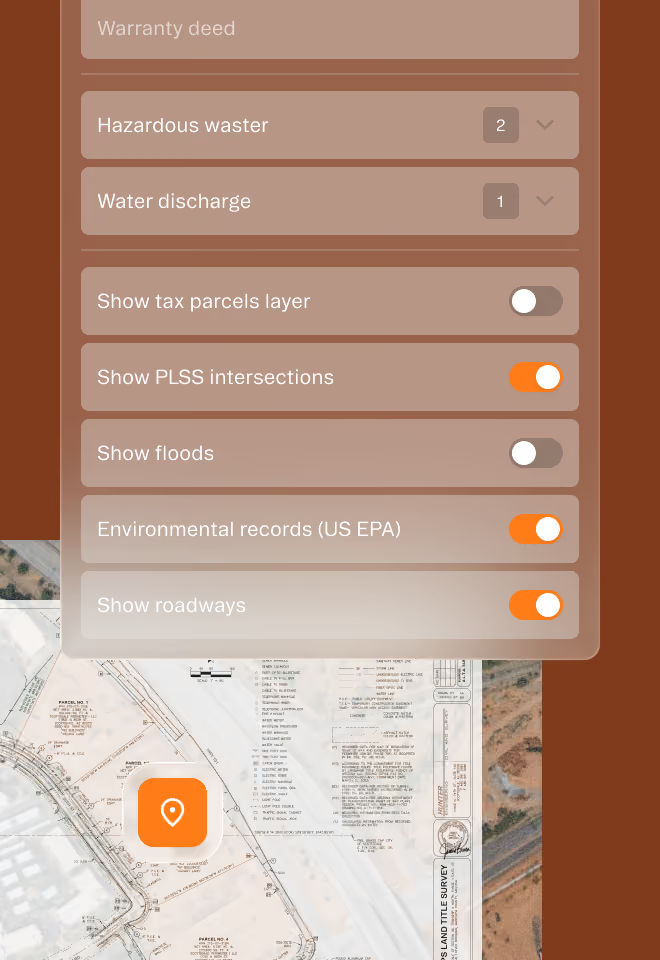
See how legal rights, restrictions, and physical conditions affect the property. Plot legal descriptions, overlay easements, access rights, and boundaries, and layer in real estate data to identify issues that are difficult to understand from documents alone.

Drafting & negotiation
Turn agreed terms and deal issues into the documents needed to move towards closing. Draft from your forms, compare redlines, and produce closing checklists, closing packages, and signed deliverables.
Deal coordination
Keep parties, tasks, deadlines, and documents aligned throughout the transaction. Orbital gives lawyers, owners, title companies, and business teams a shared view of their deals.

“What made Orbital the right choice for us and specifically our real estate practice was it had that domain-specific model and knowledge.”
Covering the full complexity of commercial real estate transactions

From due diligence and PSA review to closing checklist, without the manual overhead.
Abstract, compare, and negotiate leases across any asset class.
Review loan documents, track funding conditions, and produce consistent closing packages.
CC&Rs, REAs, and entitlements, fully analyzed before capital is committed.
Answers from across your portfolio, without reading every document to find them.
Frequently asked questions
How does Orbital help real estate teams progress deals faster?
Orbital reduces the manual work involved in due diligence, document review and cross-referencing, drafting, negotiation, property analysis, and deal coordination.
It helps commercial real estate teams and attorneys assemble information and prepare work product more efficiently, allowing them to focus on assessing risk, exercising their own expert judgment, advising clients, and ultimately progressing the transaction.
How does Orbital reduce risk while accelerating transactions?
Orbital makes it easier for attorneys to identify inconsistencies and oversights earlier, while still providing full control and human judgment. Complex, interconnected document sets are reviewed holistically to surface potential issues, with all findings linked back to underlying source material and drafting changes, making it easier for teams to review and verify.
Does Orbital replace legal judgment?
Not at all. Attorneys and real estate teams remain responsible for the legal analysis, negotiation strategy, and final decisions, while Orbital automates the document-heavy and administrative tasks. All outputs are designed for attorney review, with source-linked findings, tracked changes, and clear audit trails to keep lawyers in control.
What makes Orbital different from general-purpose legal AI?
Orbital is designed specifically for commercial real estate. It is built with a real estate frame of reference, combining real estate-specific knowledge, workflows, and data to help teams understand the asset behind every transaction — not just review the documents. Its pre-built workflows, review logic, drafting tools, and reports reflect real estate processes and challenges, while Property Visualizer connects the legal record with interactive maps and integrated real estate data.
How does Orbital support the full transaction?
Orbital supports commercial real estate teams throughout the entire deal. From real estate-specific capabilities that support due diligence and document analysis, helping to identify issues early on to accelerating drafting, negotiation, and preparing closing documents, all while maintaining attorney oversight. Property visualization shows teams how legal rights and restrictions impact the physical property. Deal coordination makes sure parties, tasks, documents, and deadlines stay aligned from initial review through to closing.